


Page 10 - hypertension_newsletter
P. 10
REFLECTIONS
                                                                                                                   Hypertension
     Hypertension Global Newsletter #10 2026


     This article is a comprehensive systematic review and meta-analysis of 484 randomised, double-blind, placebo-controlled trials involving
     over 104,000 adult participants. The researchers aimed to quantify the exact BP-lowering efficacy of the five major antihypertensive   Hypertension
     drug classes: ACEis, ARBs, beta blockers, CCBs, and diuretics. By extracting data on placebo-corrected reductions in SBP, the authors
     standardised these treatment effects and developed a novel efficacy calculator. Furthermore, they introduced a new clinical classification
     system, defining drug regimens as low, moderate, or high intensity based on whether they reduced SBP by <10 mmHg, 10–19.9 mmHg,
     or ≥20 mmHg, respectively, from a baseline of 154 mmHg.

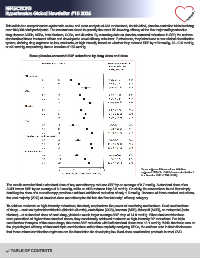
                   Mean placebo-corrected SBP reductions by drug class and dose


                                                                                       Boxes represent mean values, whiskers
                                                                                       represent 95% CIs. Estimates are standardised
                                                                                       to a baseline SBP of 154 mmHg.


     The results revealed that a standard dose of any monotherapy reduces SBP by an average of 8.7 mmHg. A standard dose of an
     ACEi lowers SBP by an average of 6.8 mmHg, while an ARB reduces it by 8.5 mmHg. Crucially, the researchers found that simply
     doubling the dose of a monotherapy provides a minimal additional reduction of only 1.5 mmHg. Because of these modest reductions,
     the vast majority (79%) of standard-dose monotherapies fall into the “low intensity” efficacy category.

     To achieve moderate or high-intensity reductions, the study emphasizes the power of combining medications. Dual combinations
     of drugs – such as hydrochlorothiazide (thiazide diuretic), amlodipine (CCB), losartan (ARB), lisinopril (ACEi), or metoprolol (beta
     blocker) – at a standard dose of each drug, yielded a much larger average SBP drop of 14.9 mmHg. When dual combinations
     were prescribed at higher than standard doses, they consistently achieved moderate or high-intensity BP reductions. For triple
     combination therapies of the same drugs, the mean SBP reduction with half standard doses was 13.1 mmHg. While the focus was on
     the physiological efficacy of dual and triple combinations rather than explicitly analyzing SPCs, the authors note in their disclosures
     that these robust combination regimens are the foundation for developing low fixed-dose combination products to treat CVD.


          TABLE OF CONTENTS

